
- Data Sovereignty
Why Sovereignty is the Only Sustainable Path: The Future of Professional Judgment
In 2011, Marc Andreessen famously noted that "Software is eating the world." By 2024, Nvidia’s Jensen Huang updated that reality: "AI is eating software." As we move into 2026, we are entering the final stage of this evolution: Agents are eating the enterprise.
In this "agentic world," organisations are no longer just looking for tools to help humans work; they are building autonomous systems to monitor, intervene, and scale their expertise. But as AI continues to consume the traditional software stack, a critical question arises: Who owns the brain?
In our previous post, we identified 13 questions every organisation must ask their software providers to ensure they aren't being locked into a legacy silo. At the heart of those questions lies a single, defining principle: Sovereignty.
The Collective AI Trap: Building Someone Else’s Moat
A Typical Service Provider response to the AI revolution is to build a "Collective AI" model. Their approach is simple: they harvest data from every customer to train a proprietary, centralised AI.
While this offers a short-term efficiency for example allowing the vendor to "predict" scores for you, it creates a Sovereignty Blind Spot. You are effectively paying a vendor to build an intellectual asset that you can never own, move, or fully audit.
The 3 Hidden Costs of Collective AI:
The Intelligence Tax: You subsidise the vendor’s R&D. Every time you use their system, their product gets smarter, while your unique expertise is absorbed into a generic "black box" that you must rent back.
Regulatory Fragility: As the EU AI Act and global privacy standards tighten, "Collective Training" models face increasing scrutiny over consent and data reuse.
The Moat Problem: If your standards are locked inside a vendor's proprietary AI, you cannot take that intelligence with you. You have built a moat for the vendor, not for yourself.
The Sovereign Path: Powering Your "System Brain"
At RM Compare, we believe in Sovereign Intelligence. We don't want to mark your work; we want to be the engine that powers your ability to mark it. We provide the "Intel Inside" for professional judgment.
In a sovereign model, the relationship is flipped. Instead of you feeding a vendor's brain, we provide the high-fidelity data you need to feed your own:
- Zero Training Policy: We never use your candidate data to train our internal models. Your organisation’s unique professional judgment remains entirely yours.
- Agent-Ready Infrastructure: Because we use a modern, graph-ready technical stack, our data is "machine-ready."
- Building Your Compass: We provide the validated "Rank and Ruler" data specifically so you can feed it into your own private cloud. This allows your autonomous agents to consume our data to trigger interventions or verify standards in real-time.
Why Sovereignty is the Only Sustainable Path
In an agentic world, the organsation with the best validated data wins. If your data is trapped in a vendor's silo, your AI agents are blind. If your data is used to train a vendor's model, your advantage is diluted.
Sovereignty is about Agency. It is the technical realisation of the Welsh educational vision of professional judgment. It is the practical answer to the Schools Week vision of open, interoperable systems.
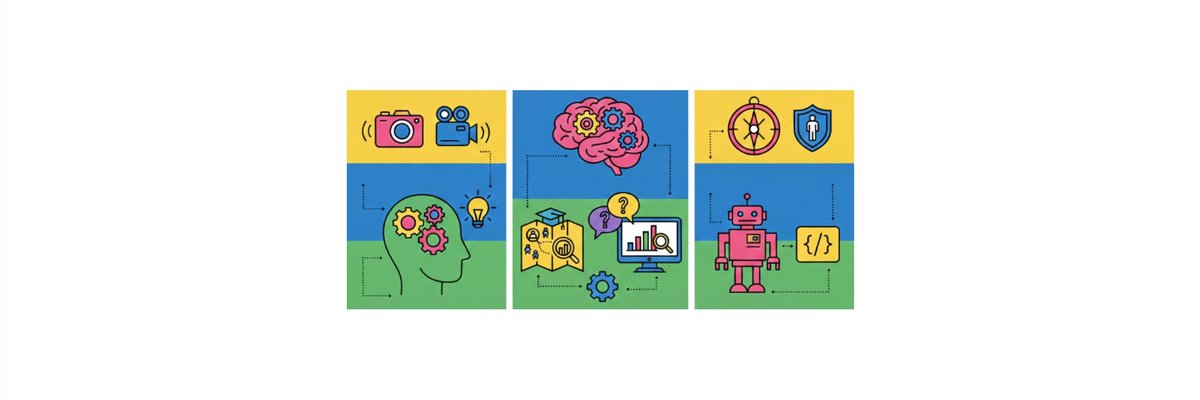
By focusing on the Capture Layer, Intelligent Insight, and the Professional Compass RM Compare ensures that the "Intelligence" stays where it belongs: with you.
Conclusion: Don't Be Eaten
As AI continues to eat software, the only thing that remains truly valuable is validated human judgment. Our mission is to provide the global infrastructure for that judgment that is protected, private, and entirely under your control.
We provide the engine; you drive the car.
Are you building a moat for your vendor, or a bridge for your future? If you haven't already, we invite you to put your current technology stack to the test. Use our 13-Question Audit to see if your providers are truly ready for a sovereign, agentic world.