
Blog
Posts for category: Product
-

Newsletter October 2026
Despite being only a few weeks since our last Newsletter, we have plenty to share in this update, the highlight being the extension of RM Compare | ⚡NOW onto non-mobile devices.
-
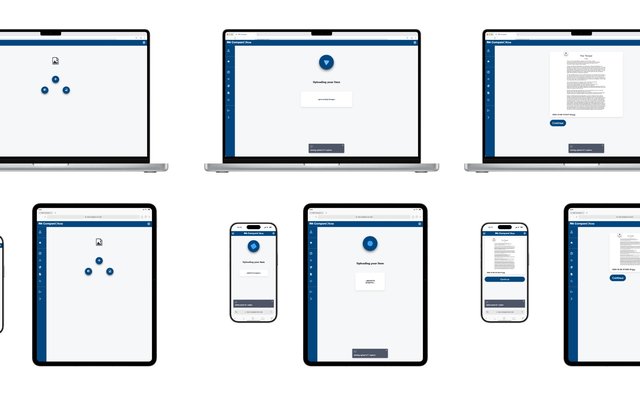
New! RM Compare | ⚡NOW - now available on any device
Hot on the heels of the 'mobile first' release of RM Compare | ⚡NOW. we are pleased to make it accessible on any* device.
-
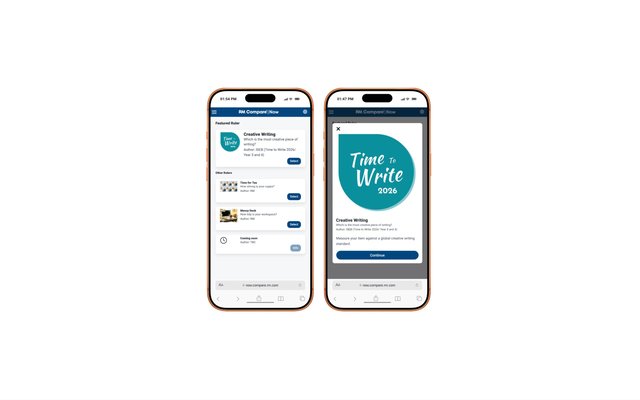
New! |⚡NOW Creative Writing Ruler
We are delighted to say that we have been able to add our first 'proper' ruler, supplied by the Independent Schools Examination Board who have been a long term partner.
-
Newsletter September 2026
We're back! In fact we are soooo back with a special announcement about RM Compare | NOW, our new on-demand mobile Comparative Judgement experience.
-

New! RM Compare | ⚡NOW ...... available now!
You are invited to try out the worlds first mobile, on-demand Adaptive Comparative Judgement experience. For those following closely this has been quite a journey and long term ambition. There is still more to learn and more to do, but reaching this release is a significant step.
-

Shared Standards: Making Quality Reusable
Shared Standards connects assessment evidence across RM Compare. Studio creates comparative ranks, Hub securely governs mark-derived and ACJ evidence, and Live applies approved rulers to new work. Together, they support consistent standardisation, moderation and on-demand comparison - helping organisations make professional judgement transparent, reusable and reliable.
-
Steady State, Not Static: Maintaining Assessment Standards When Questions Change (3/3)
This post explains how awarding organisations can maintain shared standards even when assessment questions change each year. Rather than relying on a fixed set of historic examples, a living master ruler uses approved anchor items and bridge calibration to test how new task-specific work relates to an established standard. This allows organisations to link, limit or separate new evidence responsibly—maintaining continuity without forcing false equivalence.
-
From Marked Evidence to Reusable Rulers: A Practical Path for Awarding Organisations (Part 2/3)
Awarding organisations already hold valuable standards evidence in marked candidate work, mark schemes, annotations and standardisation materials. This post explains how those assets can become governed reference sets in RM Compare—and, where the assessment construct aligns, be strengthened through ACJ into stable, reusable rulers. The result is a dual-evidence standard that preserves the authority of original marking while supporting more consistent standardisation, moderation and live comparison.
-
From Item Repositories to Standards Repositories: Making Shared Quality Reusable (Part 1/3)
This post explores why awarding organisations should move beyond static item repositories and build standards repositories: governed, reusable evidence of what quality looks like. It shows how marked work, annotations, mark schemes and examiner judgement can become enduring assets, and how ACJ can strengthen suitable reference sets into stable, reusable rulers for standardisation, moderation and live assessment.