NEW! ⚡NOW LbE Reporting
The new ⚡|NOW reporting allows a user to view work from the standard that is of a similar standard to their own, as well as work that is of a quality that is a little higher and a little lower.

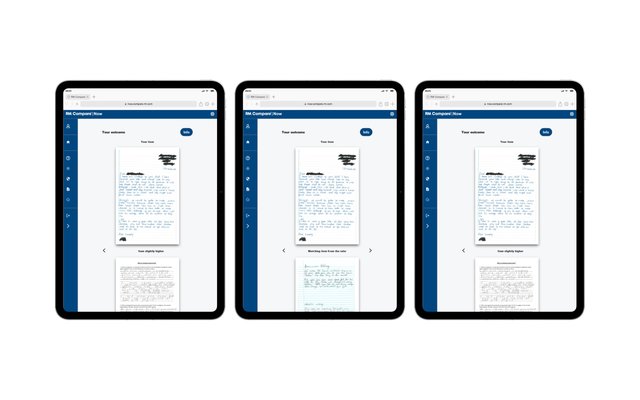
The new ⚡|NOW reporting allows a user to view work from the standard that is of a similar standard to their own, as well as work that is of a quality that is a little higher and a little lower.

Despite being only a few weeks since our last Newsletter, we have plenty to share in this update, the highlight being the extension of RM Compare | ⚡NOW onto non-mobile devices.

When you build a mobile experience for comparative judgement, the temptation is to start with the desktop application and ask: how can we fit everything onto a smaller screen? With RM Compare |⚡NOW, we asked a different question: what does someone need to make a useful comparison, right now?
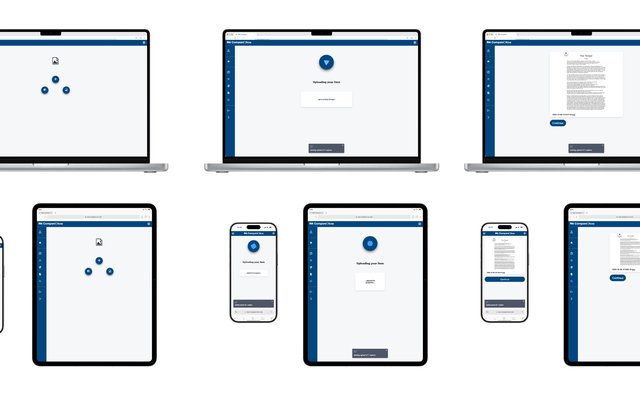
Hot on the heels of the 'mobile first' release of RM Compare | ⚡NOW. we are pleased to make it accessible on any* device.
Another bumper edition featuring product updates, research reports and a number of opinion pieces. The pace of change in assessment is exponential, driven by the impact of AI. Keeping up can be difficult. We prioritise speed of learning in everything we do to help you to get the very latest perspectives. We are learning faster than ever and will continue to share as we progress. We build RM Compare to facilitate fast learning, and also support research partners around the world to drive things forward. There has never been a more exciting (or important) time for assessment.

What can a dating app teach us about assessment? Quite a lot, as it turns out. The dramatic difference in decision time across platforms, highlighted in the chart below, is at the heart of RM Compare’s mobile-first transformation. It’s also a bridge—built by research—that connects traditional marking assumptions to the new realities of digital assessment.

A recent study (2025) from Jeffrey Buckley (Technological University of the Shannon) and Caiwei Zhu (Delft University of Technology) set out to answer a critical question for anyone seeking fairness and efficiency in educational assessment: How feasible is Adaptive Comparative Judgement (ACJ) when deployed in real classrooms?
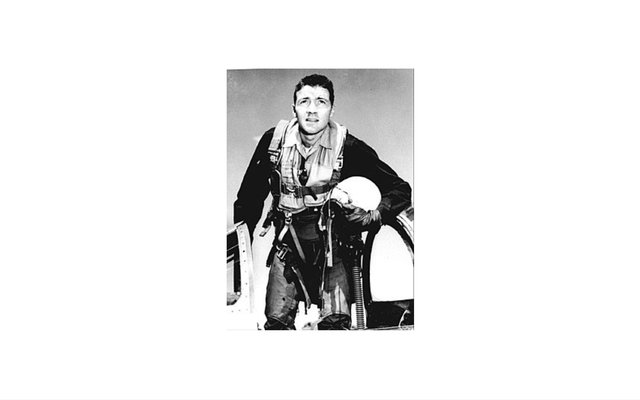
Innovation isn’t a straight line - it’s a dynamic cycle. Nobody grasped this better than John Boyd, the US Air Force Colonel and visionary strategist behind the OODA loop. Boyd’s model - Observe, Orient, Decide, Act - was developed to help fighter pilots out-think and out-manoeuvre their opponents. Over time, it became a blueprint for learning organisations everywhere: success comes from cycling through these stages faster and smarter

As AI-powered tools increasingly participate in educational assessment, a critical challenge comes into sharp focus: AI judges very differently from humans. This difference is more than technical; it threatens the fairness, trust, and validity of assessment systems if left unaddressed.

At the heart of every debate around assessment, whether about student work, creative output, or performance reviews, lies a deceptively simple truth that all judgements are comparative. This insight isn’t just a philosophical curiosity, it is the key to understanding why trust and validity in marking are so challenging in an era of artificial intelligence.
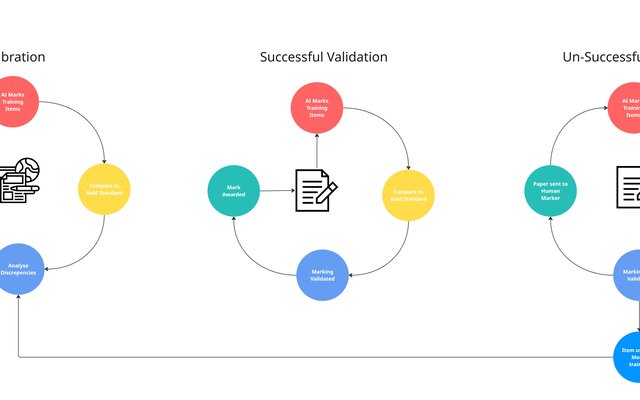
In 2025, the educational assessment sector experienced a step change in the evidence base supporting Comparative Judgement (CJ) as a validation layer—bolstering the RM Compare approach described throughout this paper. Major independent studies, regulatory pilots, and industry-led deployments have converged on the effectiveness, reliability, and transparency that CJ-powered systems provide for AI calibration and human moderation alike.

Artificial intelligence is becoming deeply embedded in how we teach, learn, and assess. But as LLMs and automated marking tools step into spaces once reserved for humans, a fundamental question emerges: can AI truly understand what we mean by quality and value?
Can LLM's understand concepts of 'value' and 'quality' in the same way as humans do? If not what does this mean for AI assessment? We completed a short study to explore more, and to think about some of the implications.