NEW! ⚡NOW LbE Reporting
The new ⚡|NOW reporting allows a user to view work from the standard that is of a similar standard to their own, as well as work that is of a quality that is a little higher and a little lower.

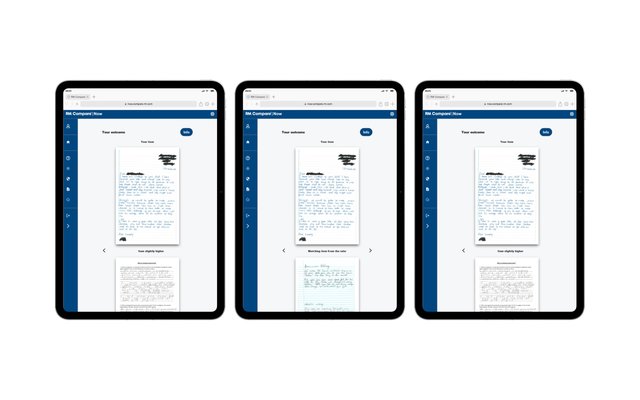
The new ⚡|NOW reporting allows a user to view work from the standard that is of a similar standard to their own, as well as work that is of a quality that is a little higher and a little lower.

Despite being only a few weeks since our last Newsletter, we have plenty to share in this update, the highlight being the extension of RM Compare | ⚡NOW onto non-mobile devices.

When you build a mobile experience for comparative judgement, the temptation is to start with the desktop application and ask: how can we fit everything onto a smaller screen? With RM Compare |⚡NOW, we asked a different question: what does someone need to make a useful comparison, right now?
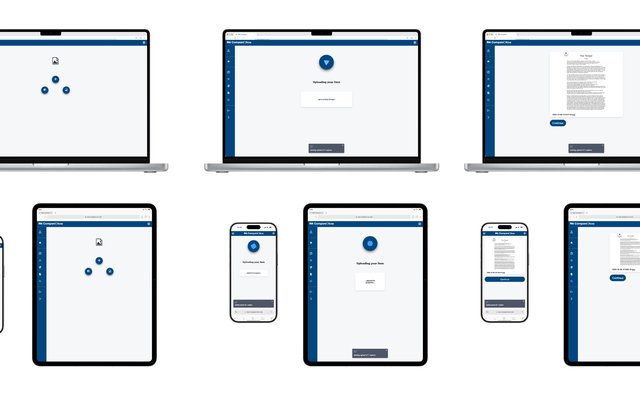
Hot on the heels of the 'mobile first' release of RM Compare | ⚡NOW. we are pleased to make it accessible on any* device.
Over this series we’ve built an argument step by step: Different curriculum models (content, product, process) need different assessment logics. Curriculum for Wales (CfW), as illuminated by Camau i’r Dyfodol, is best understood as a process curriculum. Adaptive Comparative Judgement (ACJ), via RM Compare, is an agnostic engine: it can serve any of these models depending on how it’s configured.
So far in this series we’ve: mapped three curriculum models (content, product, process) and their aligned assessments; seen how Camau i’r Dyfodol helped Wales understand Curriculum for Wales (CfW) as a process curriculum; and explored how Adaptive Comparative Judgement (ACJ), via RM Compare, is an agnostic engine that can serve any of these models depending on how it’s configured. In this post, we look at what happens when those pieces don’t line up
The core idea of this post is simple but easy to overlook: ACJ is an engine, not an ideology. It doesn’t come with “product” or “process” baked in. It will faithfully amplify whichever conception of quality and progression you plug into it. That makes it powerful – and dangerous – in systems where curriculum and assessment are not yet aligned.
In this post, we zoom in on Wales. The Camau i’r Dyfodol project offers a rare thing: a system‑wide, theoretically grounded attempt to help teachers understand a new national curriculum and to see what happens when they work explicitly with a process model. It also gives us a preview of what goes wrong when that model isn’t shared or isn’t matched by the wider assessment system.
When curriculum reform “fails”, we often blame teachers, resources, or “implementation”. But very often the real problem is simpler: the curriculum and the assessment system are speaking different languages. Before we can talk about Adaptive Comparative Judgement (ACJ) or RM Compare, we need a shared map of the curriculum landscape – and a clear view of the assessment that genuinely fits each terrain.

A City of London awarding organisation recently found itself in a strange position. Year after year, candidates were passing a respected Level 6/7 qualification. The statistics looked healthy, the quality assurance paperwork was in order and the exam board could point to detailed rubrics and grade descriptors. Yet employers were telling a different story.
What began as a powerful way to compare pieces of work is now a complete, production‑ready layer of judgement infrastructure that sits underneath your existing systems and makes subjective assessment fair, fast, and repeatable at any scale. We’ve reached the point Geoffrey Moore calls the “whole product”: not just the clever core technology, but everything wrapped around it that a mainstream organisation needs to trust it with real‑world stakes.
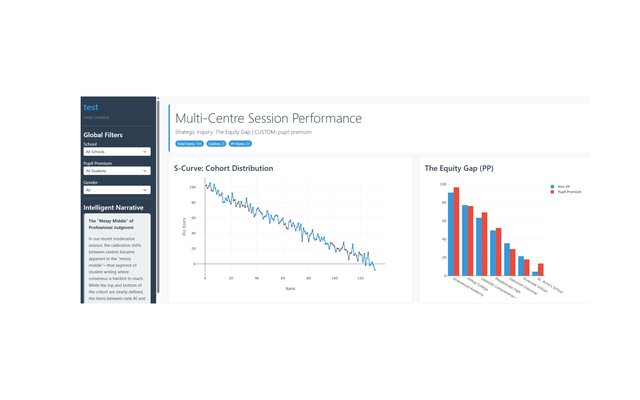
All RM Compare sessions can allow you to extract very detailed data sets (Advanced and Enterprise Plans). We already provide you with some great reporting, however the latest Generative AI tools might be able to give you even greater insights.
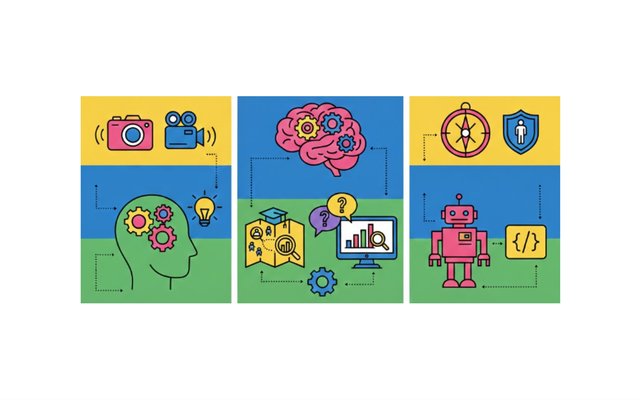
In this series, we’ve been arguing that sovereignty is the only sustainable path for professional judgment in an agentic world. We started by looking at the infrastructure we’ll need for sovereign intelligence, then at the difference between sovereign systems and AI wrappers, and most recently at dark patterns that steer people into feeding someone else’s models.