NEW! ⚡NOW LbE Reporting
The new ⚡|NOW reporting allows a user to view work from the standard that is of a similar standard to their own, as well as work that is of a quality that is a little higher and a little lower.

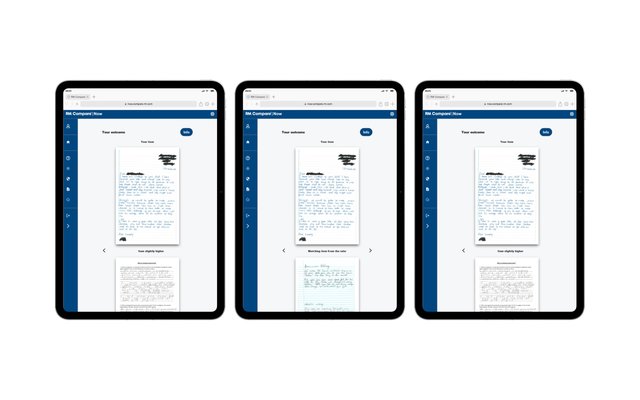
The new ⚡|NOW reporting allows a user to view work from the standard that is of a similar standard to their own, as well as work that is of a quality that is a little higher and a little lower.

Despite being only a few weeks since our last Newsletter, we have plenty to share in this update, the highlight being the extension of RM Compare | ⚡NOW onto non-mobile devices.

When you build a mobile experience for comparative judgement, the temptation is to start with the desktop application and ask: how can we fit everything onto a smaller screen? With RM Compare |⚡NOW, we asked a different question: what does someone need to make a useful comparison, right now?
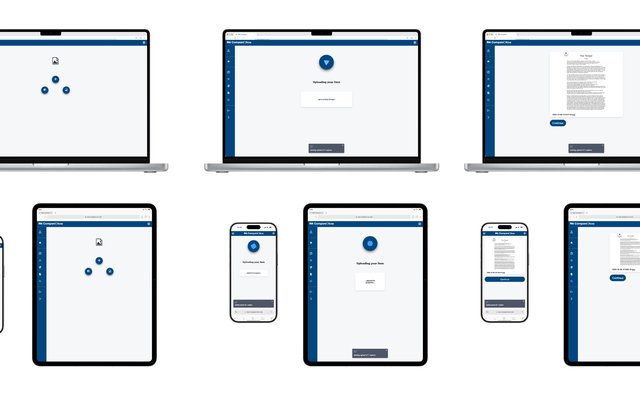
Hot on the heels of the 'mobile first' release of RM Compare | ⚡NOW. we are pleased to make it accessible on any* device.
In 1792, revolutionaries in Paris abolished a king, Americans calmly re‑elected a president, and Cambridge quietly invented something that still shapes millions of lives every year: exam marking. While politics and industry were being rebuilt in public, assessment was being rebuilt on paper. Two centuries later, we are still living inside that decision – and only now starting to see its limits.
Over this series, we’ve tried to do three things: explain why UK copyright policy on AI is shifting, argue that student work should be treated as creative property rather than free fuel, and sketch when – if ever – training on that work might be legitimate.
So far in this series, we’ve argued that student work is creative property, not just “data”, and that assessment use and training use are not the same thing. That naturally leads to a harder question: is it ever acceptable to train models on student work – and if so, on what terms?
When people talk about AI in assessment, the conversation usually goes straight to marking accuracy, bias or workload. Underneath all of that sits a quieter question that is just as important: who actually owns the work being processed – and what does that ownership mean once AI is involved?
For a while, it looked like AI developers might get a broad “free pass” to train on almost anything they could scrape. That idea has now been quietly parked. The UK government’s latest report on copyright and artificial intelligence signals a very different direction – one that matters a lot if you’re responsible for student work and assessment.
Every year in England, some things in education feel almost guaranteed. Exam season will arrive on schedule, bringing with it the familiar mix of anxiety, hope and hard work in schools up and down the country. Ofqual will emphasise that our qualifications system is robustly designed, closely regulated and delivering grades that are fair and can be trusted. And Dennis Sherwood will publish fresh analysis arguing – drawing largely on Ofqual’s own technical reports – that neither the level of fairness nor the level of trust we assume is quite what it seems.
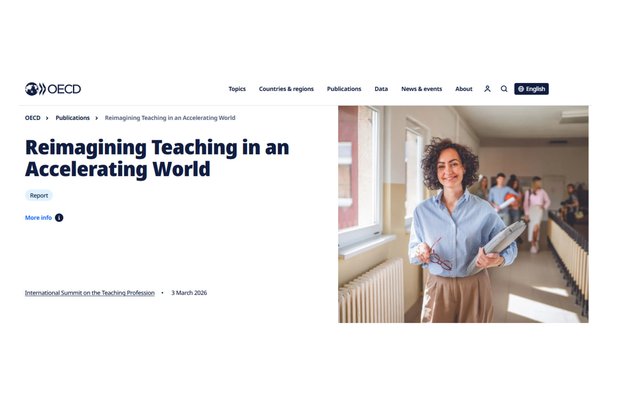
The latest OECD Reimagining Teaching in an Accelerating World report makes one thing very clear: teaching and assessment can’t stay as they are. As AI reshapes what students can do with a few prompts, the things that are easiest to test have become the easiest to automate. Systems everywhere are being pushed to value richer learning, trust professionals more, and treat AI as an educational ally rather than a threat.
A new study has given Adaptive Comparative Judgement (ACJ) one of its toughest tests yet: using it to assess long, complex law essays in a real university context. The results are encouraging for anyone interested in more reliable, fair and meaningful assessment – and they also highlight some very practical design questions we, as a community, need to solve together.
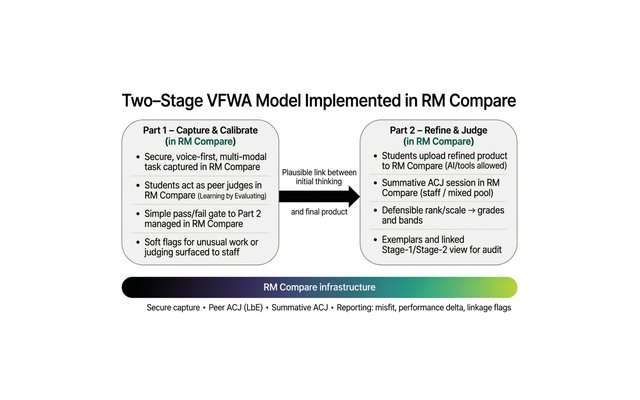
Generative AI has broken one of higher education’s quiet assumptions: that a polished essay is a reliable proxy for student thinking. When tools can generate fluent academic prose on demand, we can no longer treat the final product as straightforward evidence of cognitive effort or authorship. The question for universities is no longer, “How can we prove this text wasn’t written by AI?” but “How can we design assessments where AI cannot replace the student’s contribution, only support it?”